Art from a Scan
Sometimes people send me things; links, images, stories, things related to medical art.
Today someone sent me the winning image of the 2007 International Science and Engineering Visualization Challenge, entitled “What lies behind our nose” created by Kai-hung Fung.
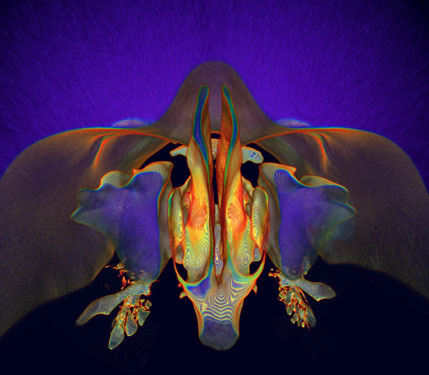
This is a great example of the kinds of things that can be done when scanning technology meets art. The image started as a CT scan from a 33 year old woman, who was being examined for thyroid disease.
I’m not sure what kind of software Fung used here, but if you want to experiment with this kind of art a little yourself, you might start with a freeware copy of OsirX.
http://www.osirix-viewer.com/AboutOsiriX.html
(Sorry PC users, but this one is Mac only)
From there, you have some options regarding what kind of tissue you want to select for, how colors are displayed, as well as the ability to cut pieces away, or turn your model. It takes some getting used to, and I am by no means an expert with this one yet, but the results can be downright cool. It’s also just a nice way to be able to view DICOM images on your own computer. If you don’t have access to any DICOM images, and you still want to try some of this first hand, you can always download one of the sample image sets available.
http://pubimage.hcuge.ch:8080/
You can read more about Kai-hung Fung’s piece, as well as the other 2007 Visualization Challenge winners here.
http://www.sciencemag.org/cgi/content/full/317/5846/1858
The Bassett Collection
Ok, so this is I guess the part where I wonder what kind of audience I’m writing for here. Many of you, will already know about this one, but for those of you that don’t, let me introduce you to the Bassett collection. I first stumbled upon these works through my school. My first class with cadavers prompted a near instant interest in cadaver photography in me. I’m still not sure whether the recommendation was meant to inspire me, or to show me that it had already been done and done well (there are a lot of both legal and ethical issues involved in cadaver photography), but I was told about some truly great work.
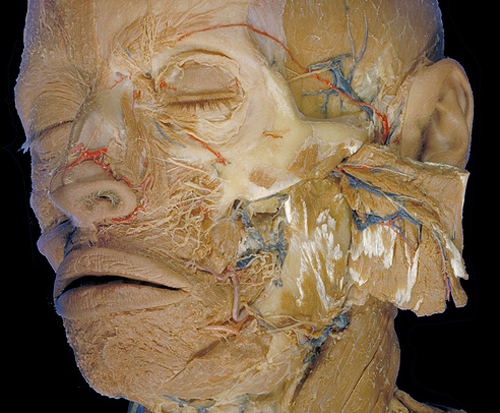
Beautifully lit, so clear, and at times haunting, this collection has to be the greatest of it’s kind out there. The shots are actually taken in 3-D and if you can get yourself a copy of the Stereoscopic Atlas of Human Anatomy, and any simple 3-D viewer (that’s right, the kind you had when you were a kid), you too can view the reels in all their 3-D glory.
As you can see here though, even the 2-D versions of these images are stunning, and well worth a look.
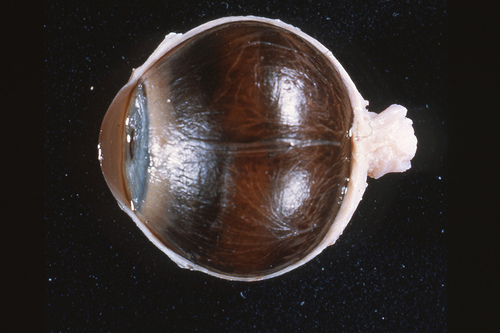

The collection resides at Stanford University’s School of Medicine. It came about as a 17 year collaboration between David L. Bassett, and photographer William Gruber.
*and FYI – Gruber actually invented that little plastic Viewmaster you had as a child!*
To view Stanford’s collection online, go here…
http://lane.stanford.edu/bassett/index.html
Inspiration; A night at the Portage Theater with Dave McKean
Last night I had the rare privilege of seeing a few of artist Dave McKean’s works up close and first hand followed by live performances and a screening of the 1929 silent film classic, Faust. I had first discovered Dave McKean in my highschool years through his collaborations with Neil Gaiman. Then he wrote Cages, and there was just something about it. I couldn’t synopsize that story for you now if I tried, but even not having looked at it in over a decade, there are pieces of it that continue to stick with me. When I shook his hand last night, I asked him if he would speak a bit about his process. As it turned out, his time at the microphone was short, but what he did speak of was inspiration. He spoke of being inspired by these old early films. And in some ways, I think that was a better answer. Process always begins with inspiration. You can see here, the original film image of the devil taking the village, and then McKean’s take on it.

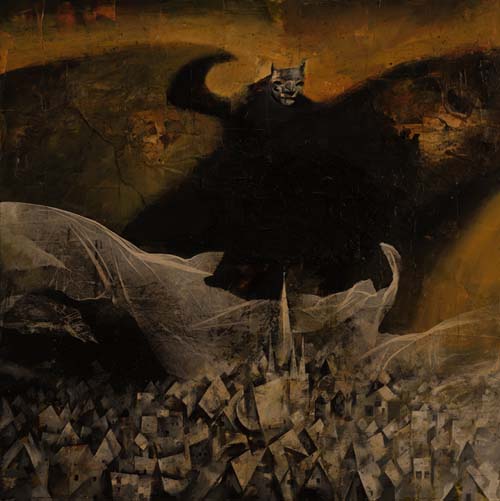 Now I had gone to this event last night looking to be inspired in mixed-media work. I went with a head swimming with thoughts about what one medium can bring to another and how I could use different kinds of skills together in my own work. But what I found instead, was inspiration in how powerful appreciation alone can be. And maybe this whole idea of mixing mediums to create something new really begins with looking at more kinds of art. The works I saw last night were not anatomical or scientific in nature. They were, on the contrary, works of expression. But perhaps there are lessons to be learned here that can be utilized in other kinds of art. So I guess the thought I leave you all with, is to remember your inspirations, whatever they may be.
Hello and Welcome
 Hello and welcome to the Anatomy and Art Blog! As the name would suggest, this is a place that delves into matters both anatomical and artistic, but particularly the line where those two worlds meet. As a student of biomedical visualization, I find myself explaining to a lot of people just what does science have to do with art and vice versa. At the same time, I find people who really study one field or the other inevitably find themselves coming back to the other side. Whether it is the scientist who marvels at the beauty and grace of the human form, or struggles with how to aptly present the elegance of something just discovered, or the artist who has studied color and form and technique, but always finds themselves drawn back to that inevitable most interesting subject, us. So please join me, in taking a look at this line between supposedly opposite worlds.