Just Finished! From Nose to Brain
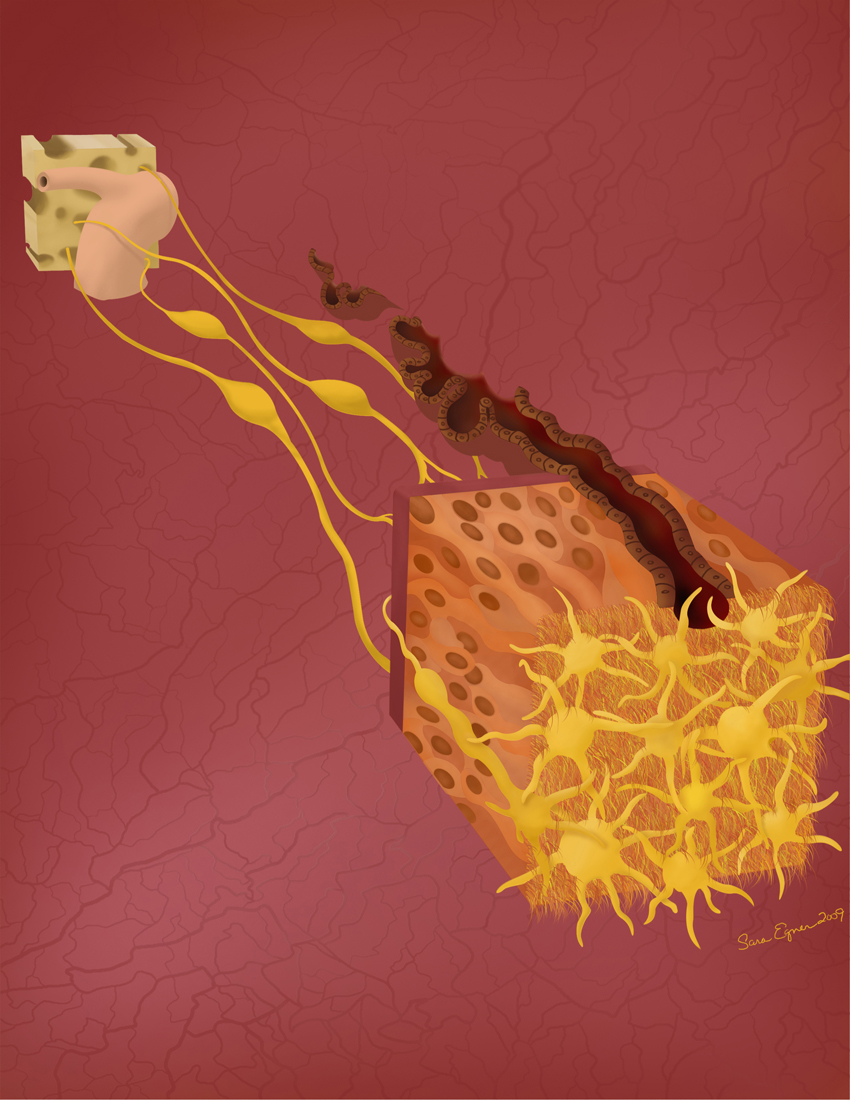
I’ve been working on this piece for a while now. And I just finished it!!!
This image represents the pathway into our first cranial nerve, the olfactory nerve. It begins with the olfactory vessicles in the foreground, and follows the signal’s path through the neuroepithelium and lamina propria, on to the skull’s cribiform plate.
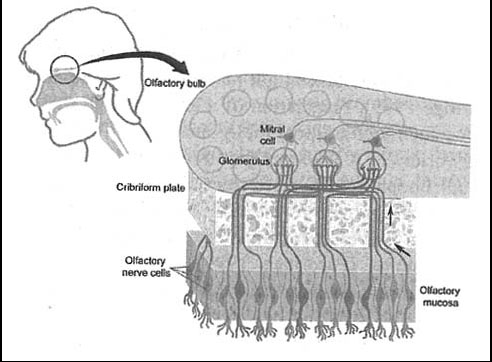
For those of you unfamiliar with this part of anatomy, I’m talking about this area in here…
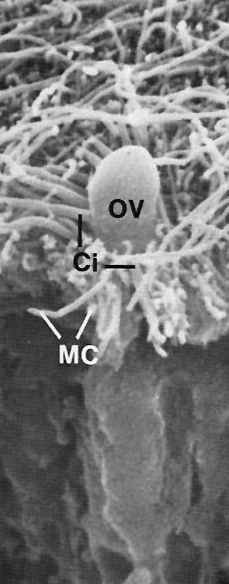
My favorite photo references for this piece came from Kessel’s work for the book “Tissues and Organs: A Text-Atlas of Scanning Electron Microscopy…”
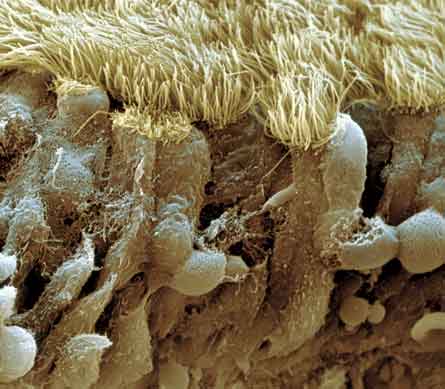
I also found this amazing photo online of nasal mucosa, unfortunately without reference to who the photographer was…
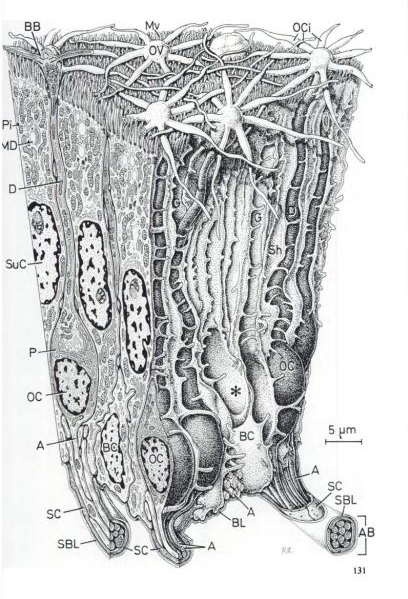
Kessel also had some good line drawings, but my absolute favorite drawn references came from R.V. Krstic’s book, “Human Microscopic Anatomy…”
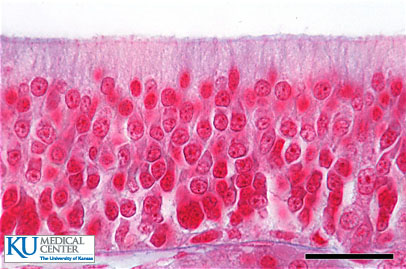
And then there are lots of examples online of epithelial cells, and how they fit together in a sliced plane…
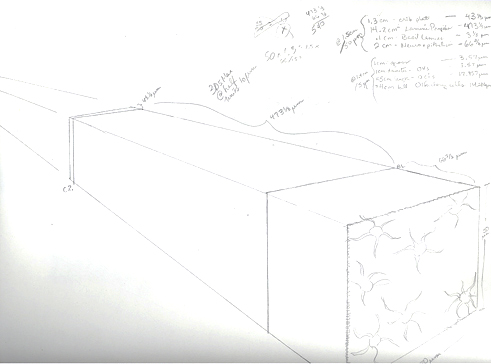
Part of the process on this one that was interesting, was being able to take exact measurements from Krstic’s work, and line up an exact reference in 3D Studio Max. This project was a class assignment, and part of the project was to use both 3D modeling software as well as Photoshop to get a better feel for the strengths and weaknesses of both 2D and 3D mediums. This allowed for a lot of cross pollination of ideas and problem solving.
Initially I just used rectangles, representing the exact measurements of the different layers involved in the scene (ie, the neuroepithelium, the lamina propria, the basement membrane, the cribiform plate). Then because 3DsMax is a 3D program, I could turn the image any way I wanted to get the best possible view.
From there I was able to get a good sketch. And then, since I was also developing a 3D image at the same time, that sketch was then helpful in further cultivating what I would model there. Having a folder of references, I went ahead and made temporary textures for the modeled pieces once they were created, and arranged my view to suit the 2D image I was working towards. Then with a print out of that, I had the perfect reference to use for my final sketch.
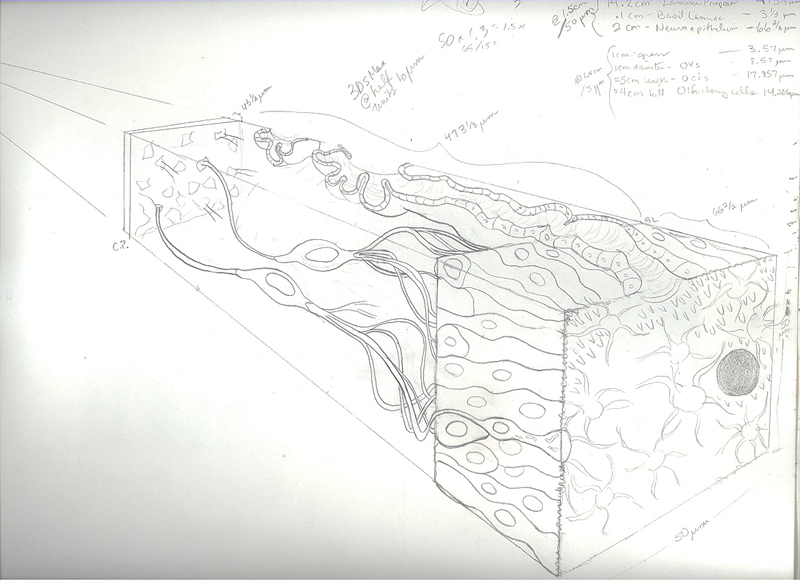
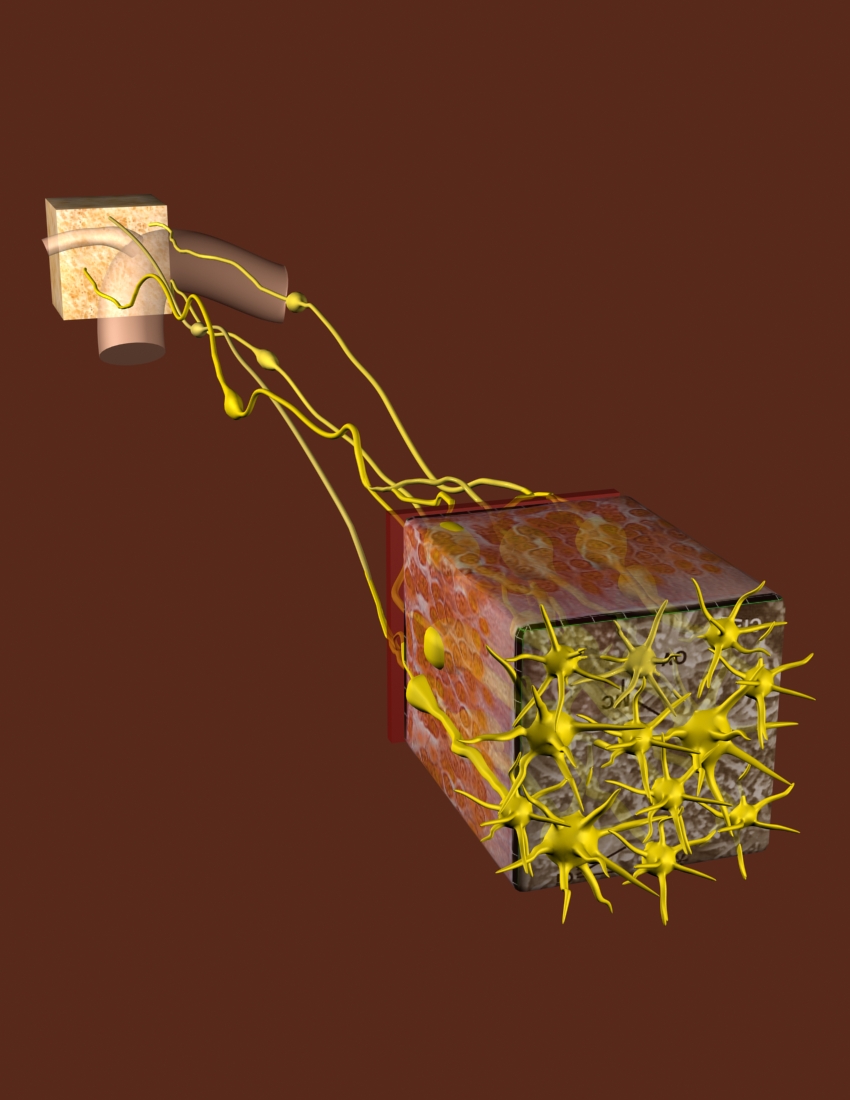
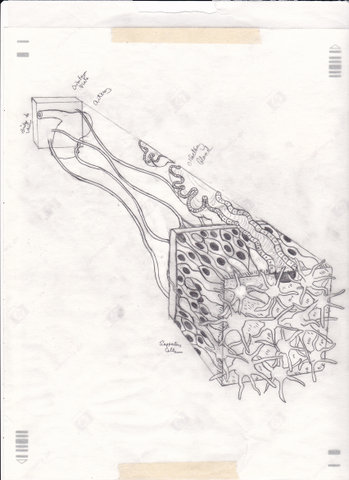
From that point, it was a matter of building up the Photoshop painting around it. Our class had even already done some work with color schemes, so a lot of that was able to be referenced throughout the process. This turned out to be an especially good thing for me, when I got sick halfway through putting this together and had to put it on hold for a while. Having so many references and decisions pre-made turned out to be very helpful in getting myself back into something I hadn’t touched in a while.
I will post the finished 3DsMax image when it is finished as well.
Digital vs Analogue
Yesterday I went to the Art Institute here in Chicago. I found myself marveling at the various techniques utilized over the centuries. But as we looked over so many pieces, I started thinking about how certain techniques have really become a thing of the past. They say even painting is becoming less and less valued. Arts like etching, mezotinting, and carbon dusting, while still appreciated in older works, are simply no longer practical for emerging artists to learn at the level of their predecessors. These days more and more things are done on a computer, and there is reason to do them that way, but it changes everything.
Tonight I went to a bar that had both DJs and live music playing. The live music was still very electronic though. And it was pretty good. I even found myself quite happily dancing to some of the DJs sets. But at a certain point my thoughts turned from how good we have gotten with making music electronically, to how long before analogue instruments become the neat old-timey way of making music. We already have a generation of kids that know the game Rock Band better than they do any real instrument. And the truth of the matter is that we have gotten very good at making electronic music. So at what point, is the effect of real physical instruments not going to be worth the cost of making them, and time put into learning to play them? It seems inevitable.
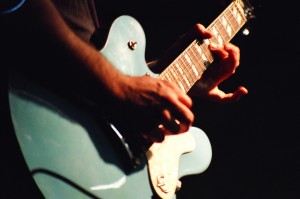
Here I am posting a photo of a guitar, and realizing that I took it with a digital camera, because just like everything else, it has become more economical and efficient to do photography digitally now. And I know that we’re all aware of this. It seems like every time I go out lately, someone is relieved to be catching up in person rather than through some social networking site. it’s all the same issue.
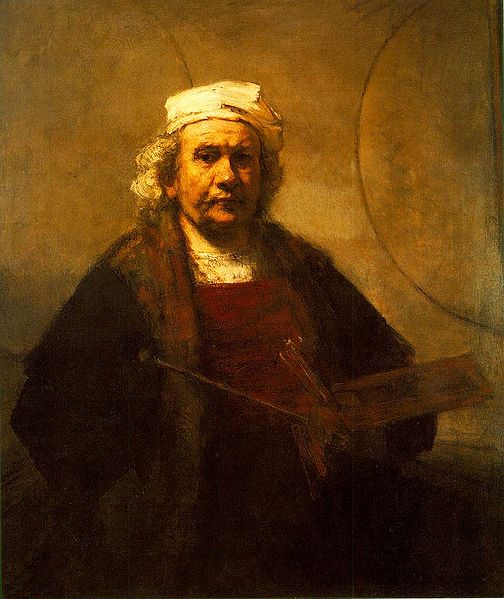
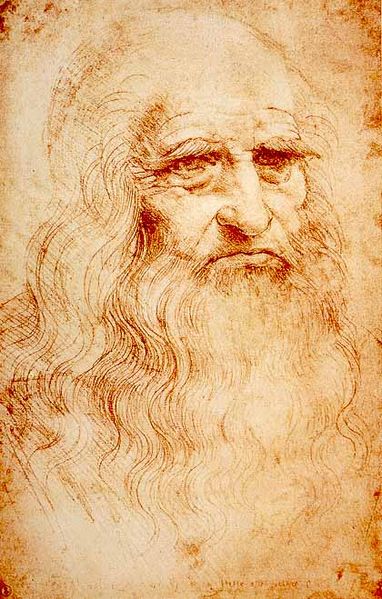
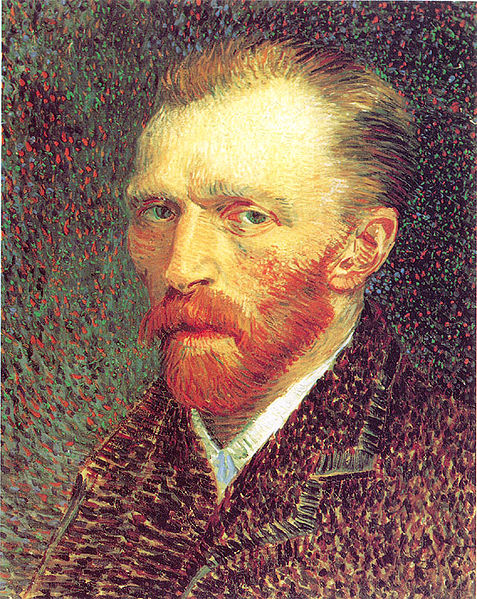
So where do we draw the line? Can we really draw a line? Or should we be setting our sites on the new and exciting forms of expression and communication our digital technology enables? Perhaps it is sentimental to worry about instruments, and tools, and skill sets left by the wayside when there are so many more waiting to be explored. What would Rembrandt have done with Photoshop? What if Leonardo da Vinci had been able to flip through digital images of scanned human figures when he studied them? What if Van Gogh had learned to paint on a screen instead of a canvas? Would their work have been anywhere near as inspiring? Would they have seen that next level still waiting to be discovered?
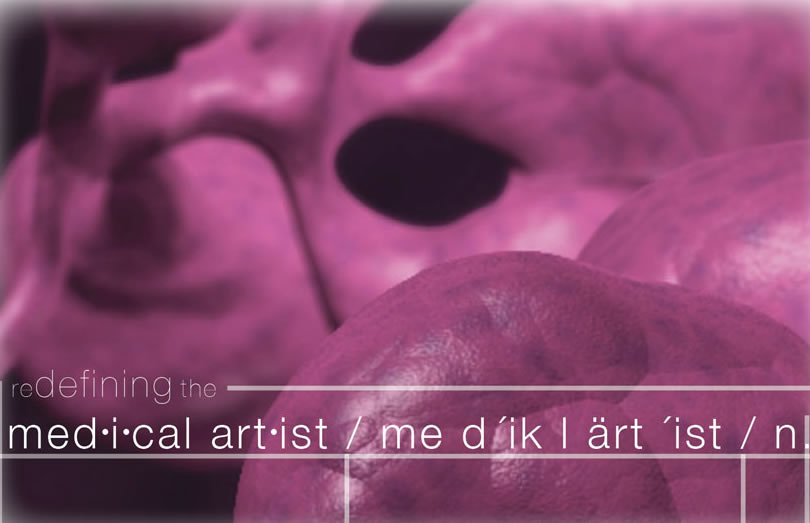
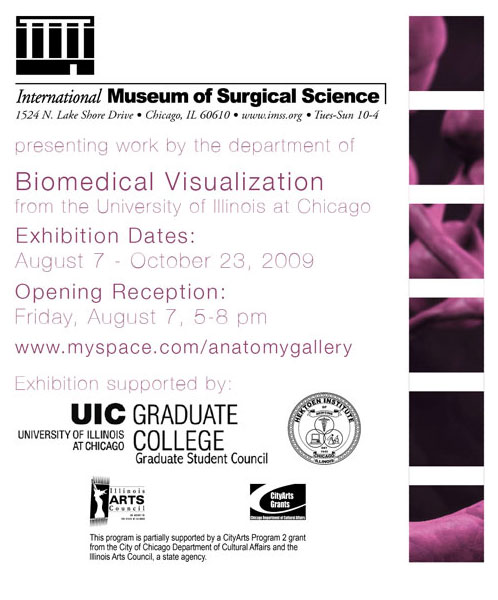
Local Event Happening Now in Chicago!
Technology
Lately there has been a technological glitch between Firefox’s new Flash upgrade, and the design behind WordPress blogs which has kept me from being able to upload images here. For as much as we use technology to create the things we want, it sure does get in the way a lot too. Well I believe I just found the work around. So here is a nice big photo to celebrate…
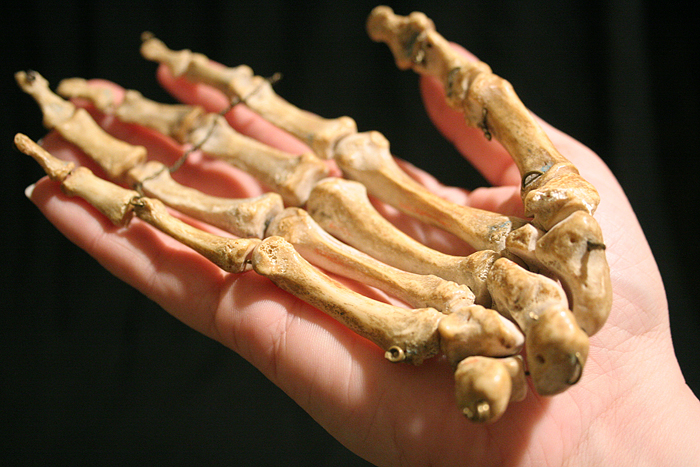
That is actually one of my photos, as well as my hand (well the living one anyways). The bones were courtesy of UIC’s collection that gets handed out for reference among students taking Gross Anatomy.
And if any of you reading here are also bloggers and encountering difficulty uploading images to your own sites, I found the fix here…
http://wordpress.org/support/topic/217126
What they don’t tell you is that disabling the Shockwave Flash plugin will affect your browser experience in other ways. In my case, I noticed that video goes offline when I have it disabled. But what you can do, is disable Shockwave Flash for just the time it takes you to upload your images, and then go back and re-enable it. Now that your files have been loaded, you can access them as you normally would.
There is little more frustrating than being blocked in our creative endeavors by technical errors and glitches. Unfortunately, the more programs we bring into our efforts, the more common this problem becomes. Just the trouble of our times I guess.
“El Corazón”
This was sent to me a long time ago. If you’re looking for a refresher in basic heart facts, or a refresher in Spanish, this is just the best there is…
Artists, Scientists, and Business?
I was recently visited by an old friend who works as a scientist out at CalTech in Pasadena. Wine was shared, university stories swapped, all those brilliant and brewing ideas discussed, and once again, as tends to happen in these types of conversations, we came back to the nature of doing business. And while art and science may be very different in the classroom, one can’t help but notice that there is a similar struggle that happens when one tries to bring their ideas into the business world.
There seems to be this unfortunate correlation between one’s passions and their business savvy. And I suppose it makes sense. The more obsessed one allows themselves to be in any endeavor, aside from that of making money, the less attention and energy one has for business. Now some people are fortunate enough to be passionate about making money. And a lot of people are just smart enough to keep their business about business and their passions elsewhere. But for many, there is this struggle.
Arts and sciences in particular tend to attract people who are driven for reasons other than money. Artists and scientists are not exactly known for their polished corporate qualities. And yet these are career paths that seem to require more defending than most. These are the ones that require you to submit individual projects for grant money, or maybe even fund-raise independently to support the work you are doing. The other route one can go, is to latch onto someone else’s project. And if you are lucky enough to get on with a good one, something you care about, that pays your bills, a good work environment, then that is lucky indeed. But unless that job is with a strong corporate entity or university, chances are another search for another good fit is just around the bend.
Now you might say that anyone is lucky to have a good job in any field these days, and there is truth to that for sure. But I think that artists and scientists have the added kick of knowing that their best chances for really being recognized, for really getting their ideas out there, for being true greats in their field, is to take that leap into uncertainty; to keep practicing their craft, insisting on environments that push them to create, and doing their projects even when no one is paying for it; in essence, to allow themselves to become obsessed.
Now I wish that I had a list of perfect answers for these all too common problems. And maybe someday I will. I have met, in my time, a few very successful artists in this effect with brilliant work. And there are as well, very successful brilliant scientists. So it is possible. The people I notice walking this line the best seem to be of a generally good temperament. One can’t help but wonder if that’s a quality that has led them well into success, or if it is a result of finding that balance and being happy in the work that they do.
Whatever the case, I think it is worth recognizing that these struggles aren’t jurisdicted to just one field or the other. In fact, I’m sure these are problems that speak to more than just the artists and the scientists. So maybe there is comfort in even just that.
2009 AMI Conference
Today kicks off the 64th Annual Conference for the association of medical illustrators. This year’s conference takes place at the Omni Hotel in Richmond Virginia, and right this moment, many a travel wary artist is getting a bit of rest before the workshops and presentations begin.
The Association of Medical Illustrators, otherwise known as AMI, is a really big deal the medical art world. They’ve been around since 1945 and continue to be a most valuable resource for medical artists. You can check out their website here http://www.ami.org/
One of the things the AMI conferences have to offer is an opportunity for new medical artists to show their work, and be seen by other professionals. Awards are also given, and a look at past Salon winning pieces give a really nice look at the kinds of work being done at a highly skilled level. You can go directly to such examples here http://www.ami.org/medical-illustration/past-salon-winners.html
If you’d like to read more about the presentations and speakers at this event, highlights are listed here http://amimeeting.org/2009/highlights.htm
A New Painting – Fire Walk
I suppose that this is the first I’ve really mentioned here that I paint, but I’ve just finished a new painting and it seems appropriate that I should post it here.
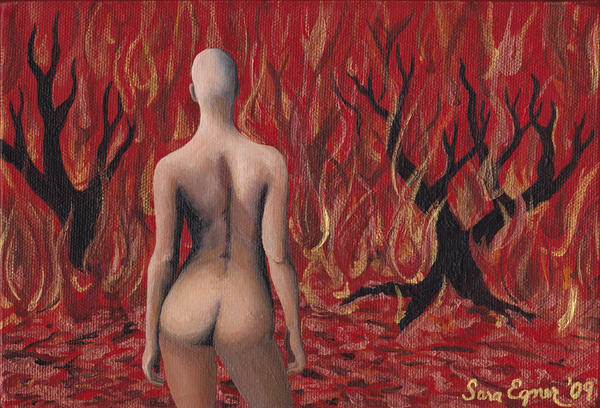
The figure was largely referenced from a Saudek piece. The rest of it is just me playing around. The different thing for me with this one was that it utilizes two different styles within the same piece. At first I wasn’t sure I liked the effect, but the look is growing on me. I may have to experiment with the idea more.
Illustrating Muscle Contraction – Many Ways to Tell the Same Story
Earlier this week, I wrote about 2007 Visualization Challenge winner, Kai-hung Fung. I couldn’t help but notice one of the honorable mentions went to artists, Mark McGowan, Pat Murphy, David Goodsell and Leana Rosetti for their poster “How Does a Muscle Work.”
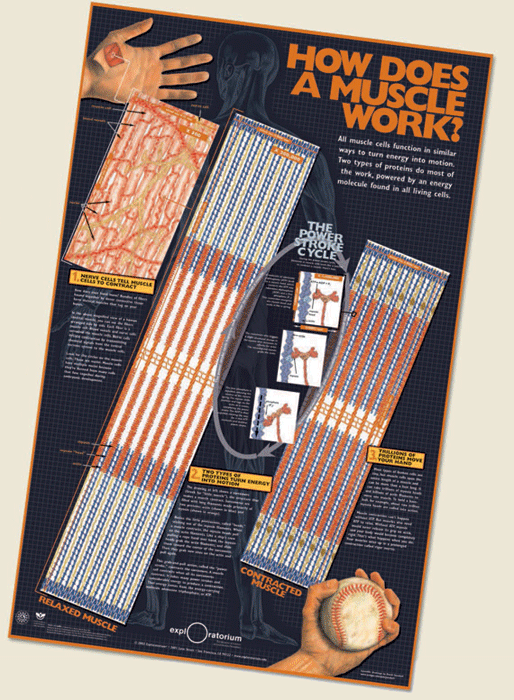
It caught my eye primarily because we were assigned the same process to illustrate our first semester in the biomedical visualization program at UIC.
The process of muscle contraction is actually pretty complicated. It is best understood when looked at on both the molecular level, but then also on the level of the actual sliding filaments in order to understand what exactly is accomplished by that molecular action.
My own take on this process for the class, was to use very simple illustrations and explain the steps, with the larger view of the sarcomere at the beginning and end of the process.
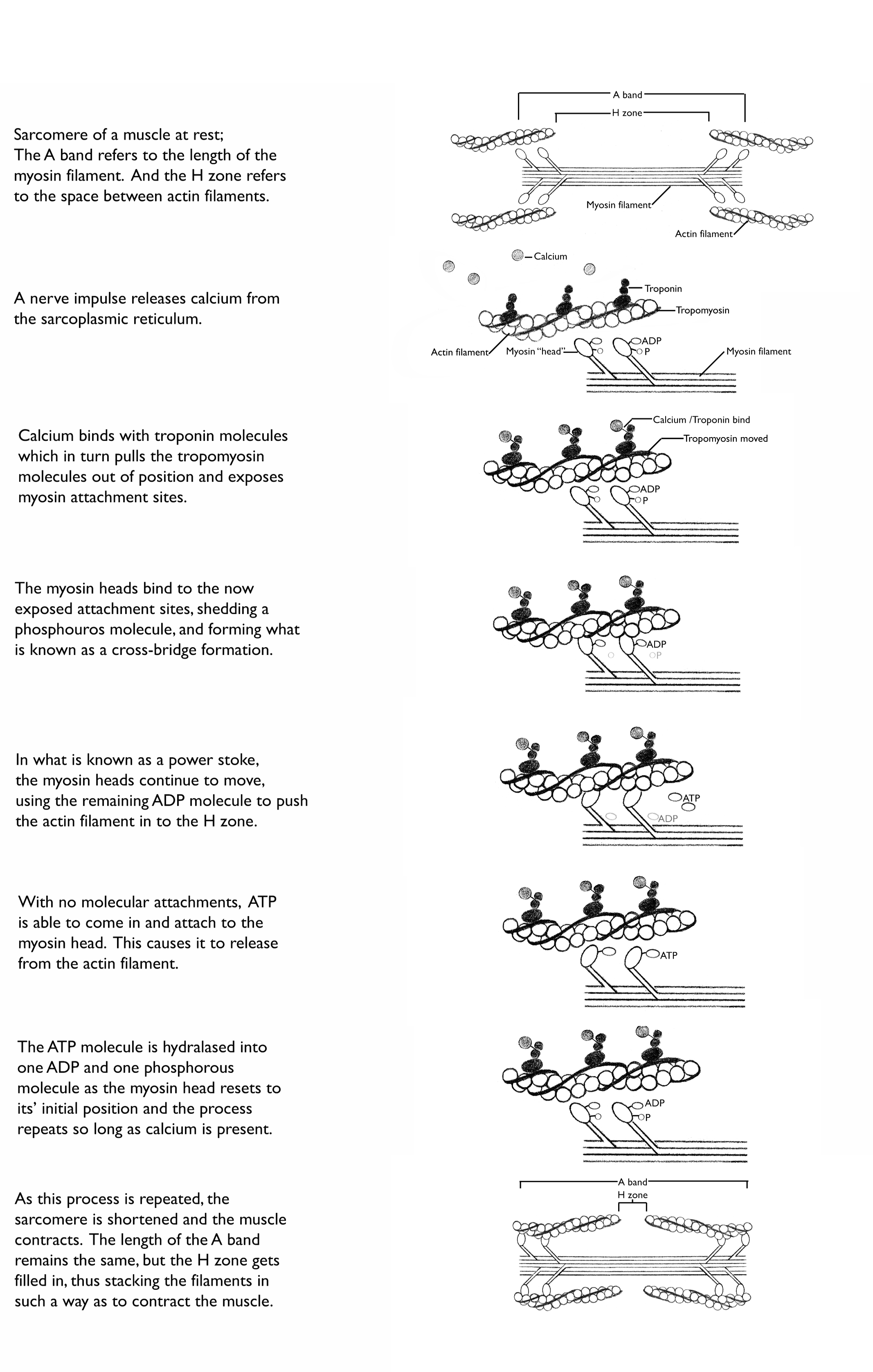
Other classmates went about illustrating the process very differently.
One of my favorites was that of Josy Conklin, who went out of her way to learn the real shape of the myosin head and bring that information into her illustration.
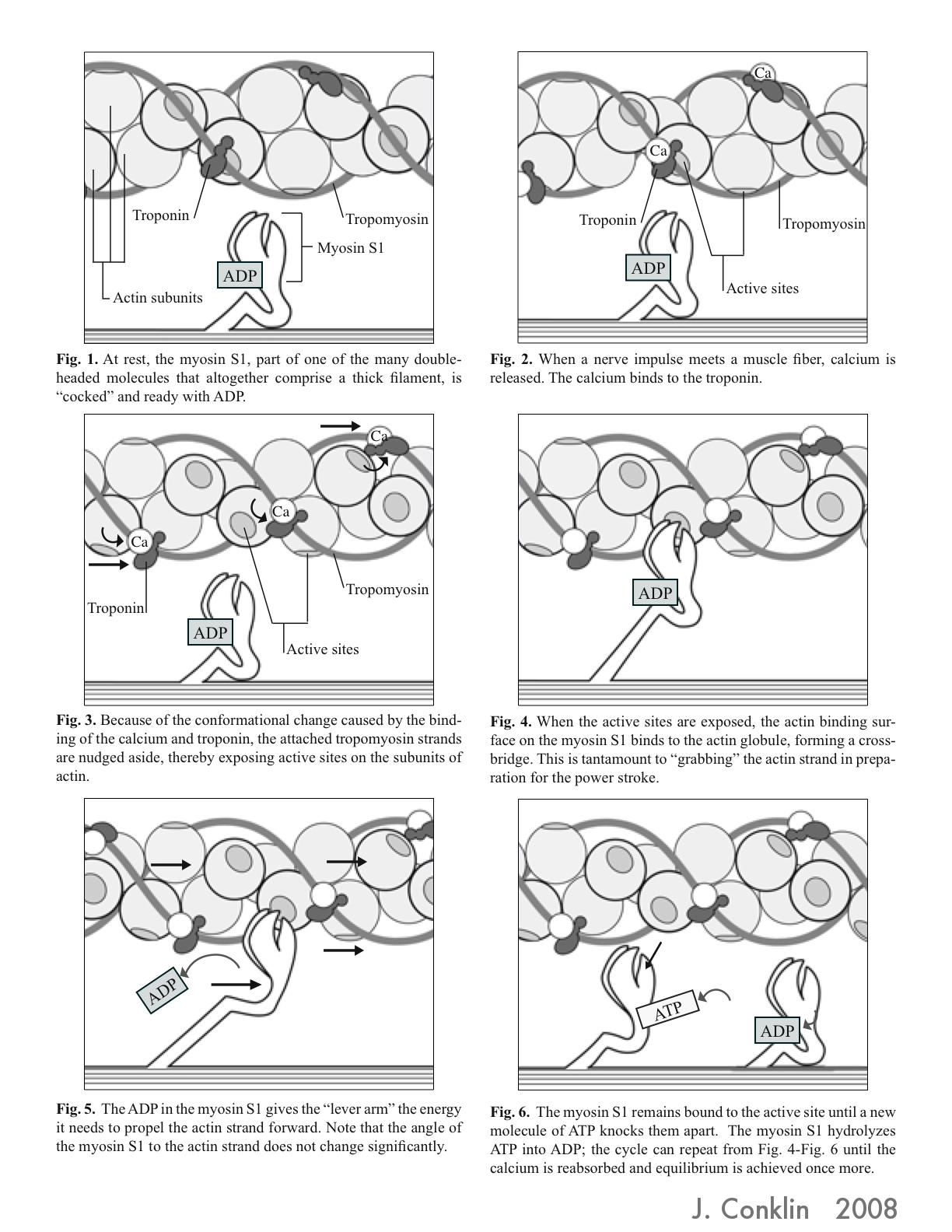
She posts this illustration to her own blog, Josydoodle, which I recommend to anyone who enjoys reading about these kinds of things.
http://josydoodle.blogspot.com/2008/12/myosin-yourosin-hisosin-herosin.html
Other classmates included less of the explaining text, and focused more on dynamic imagery. Some represented the power stroke cycle circularly, to emphasize the repetition involved in the process.
As you can see though, there are many different ways to tell this story. And that, I would say, is one of the primary issues a medical illustrator faces. A medical illustrator not only has to understand the science to be conveyed themselves, but they then have to find the best way to convey that information to the audience at hand, and utilize the media tools available to the specific project. And as with any story, there are many ways one can tell it.
Making Marks on Paper
Artists generally start simply, by making marks on paper. Whether someone hands us a crayon as children, or we pick up a pencil or pen, this is usually how it begins. And it is a good beginning.
It occurs to me that I haven’t posted any of my own work yet. But what to post? Where to begin? So I decided to start simply, and post some drawings.
The first two were done shortly before my entry into the biomedical visualization program at UIC.
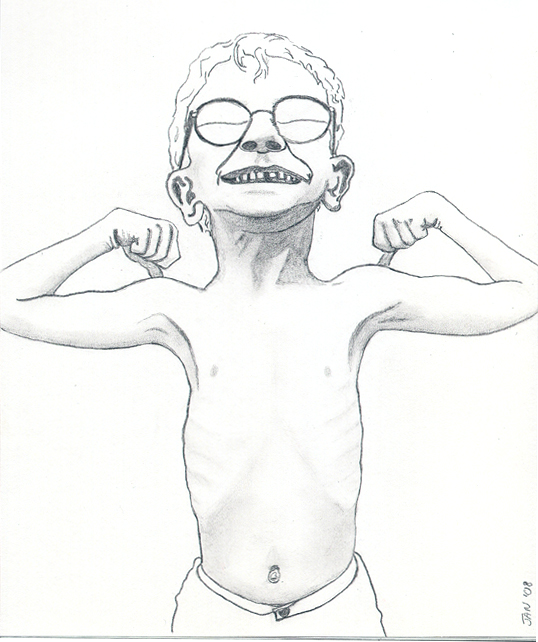

The last two were done as part of my studies out at UIC. You can tell that the lines are cleaner. I learned a lot of tricks to add to and clean up those marks on paper with a computer.
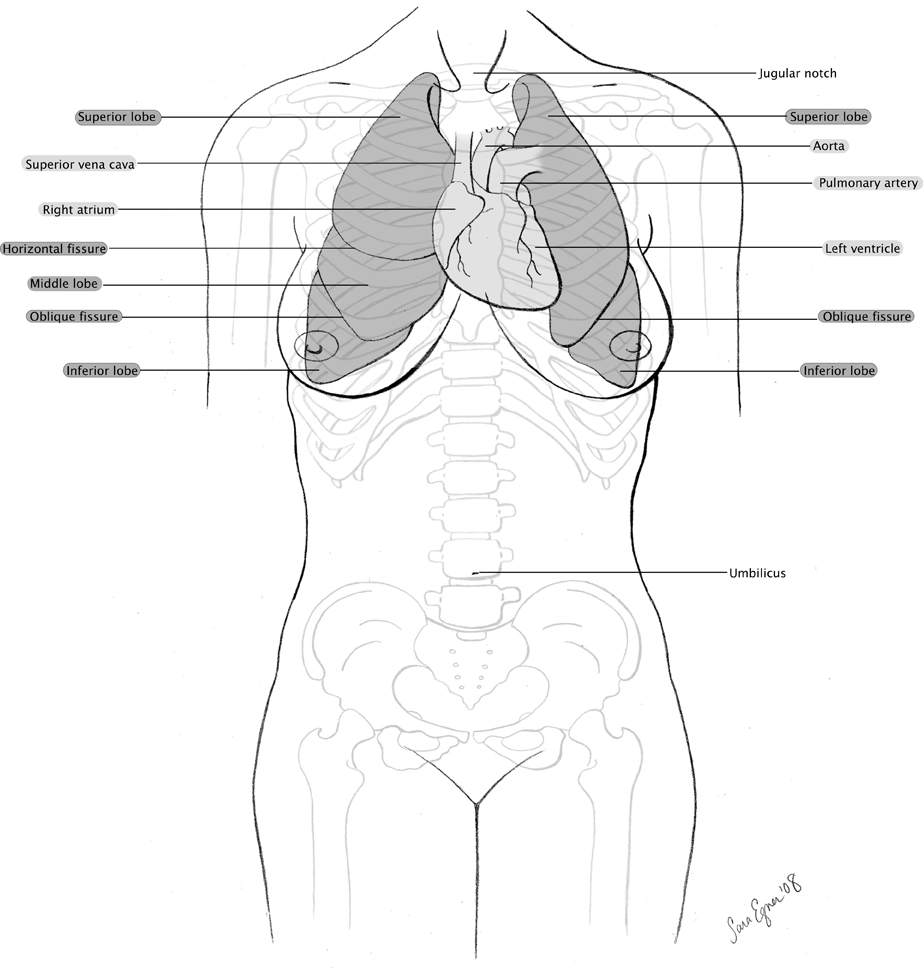
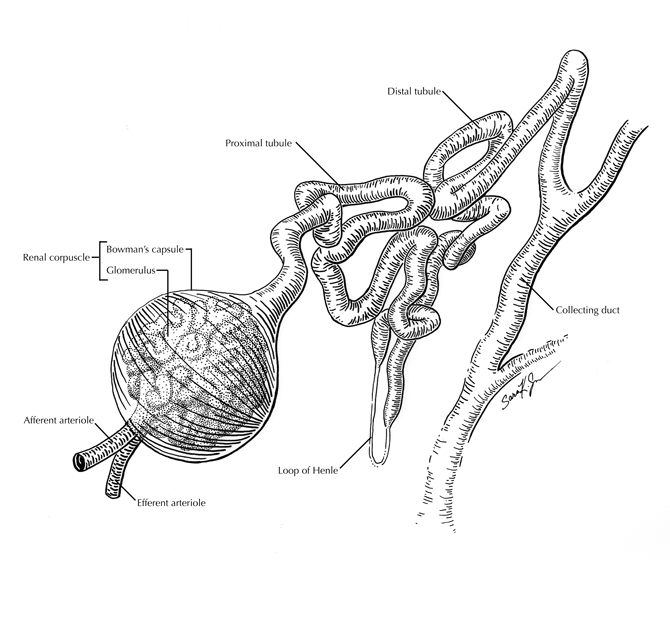
The last image here was done in pen and ink traditionally. That was an especially fun way to make marks on paper. You get to use a special paper and everything. The image itself is of a nephron, which is the smallest functional unit of the kidney (see http://en.wikipedia.org/wiki/Nephron).
So that’s a taste of my work.