Archive for May, 2012
Getting to Know Materials at the Molecular Level and Loving It
I made silicone! Ok, I made virtual silicone, but it’s still exciting to me. It was a work thing, so I hesitate to go into the details of the particular need, but the exciting part is that Marvin Sketch really is as cool as I thought it was, and I was able to draw out the individual atoms of a silicone polymer chain and produce a 3D model of that chain. And after working for years with varying kinds of silicones and studying their properties, that was just really cool for me. I’ve never really known the chemistry side of all of these materials I’ve been working with. I mean, I have notes somewhere about long polymer chains producing a different effect than the short ones (without looking it up, I want to say that the short ones were more brittle), but I really think that I could understand that so much better now with all the exposure to chemistry I am getting.
Oh drat, I wanted to show an image of the simple illustration you get out of Marvin Sketch, but it seems that the recent security hazards in allowing Java on a Mac (maybe this hits PCs too, I’m not sure), have my Java access shut down here at home for the time being. Anyway, I remain enthusiastic about this tool. And I’ll have it working from home again soon. And here, I’ll grab an image from Custom Silicone Rubberparts to give you an idea of what I mean. Hopefully they won’t mind because I am linking to them.
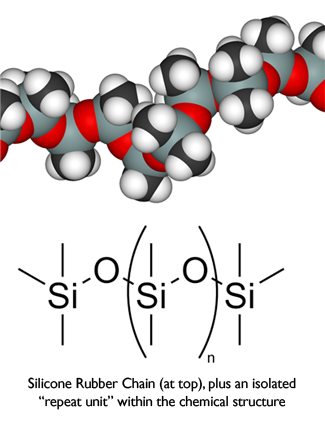
But yeah, we get to create models like that, which make me think about what it would take to literally make materials like that. It all starts with the knowledge, right?
And in the meantime I shake my fist at all those hackers and spammers out there that keep mucking up perfectly good tools for the rest of us. Java is a good tool. There’s no reason to mess with that. And all the spam comments I get here and even worse on my photo site, not cool. But making silicone, virtually, or for really really real, very cool. And all you real people who sometimes leave comments here, absolutely cool. 🙂
Cringe
Well, it’s happened. I’ve become one of those people who gets annoyed by anatomical inaccuracies. I don’t think I’ve gone completely twitchy about it. I can live with something stylized, or an honest admission of what one does not know. I can handle the occasional honest mistakes too. But I’ve caught myself a few times lately, cringing in the face of just blatantly misleading or flat out wrong information out there. And since the world at large isn’t really known for always being on the level and explaining things well, I think this is going to be one of those things that is going to keep on bothering me. Yup.
Paint-On Anatomy

I just love this image. I wish that I knew who had created it. I found it through the findings of friends who use Pinterest. I imagine that there is probably a whole photoshoot out there somewhere. It looks like too much work to have only taken an image or two.
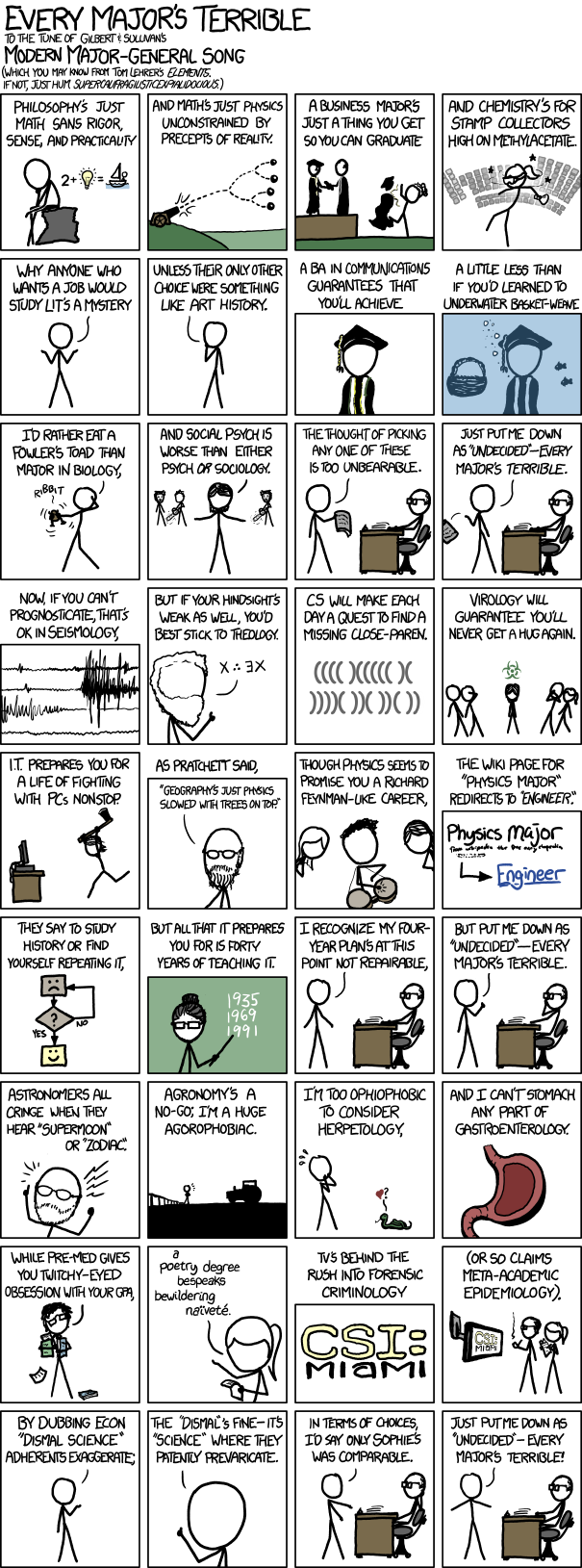
XKCD – Every Major’s Terrible
It’s been a while since I’ve posted any XKCD comics here. And this one was so cute (and also well timed for all the graduating high school students looking into further academics out there)
The Enzyme Substrate Complex
So, some of you may remember my recent post, “Molecules Molecules Molecules.” Well I’m really psyched to be able to share the animation that inspired that post with you all online now.
Enzyme Substrate Complex from sara egner on Vimeo.
I’m excited to get to show a little bit of the kind of work I’ve been doing lately over at Sapling. And I’m glad I get to share this one in particular because I know it goes just that extra step beyond the kinds of videos you find on this subject out there. And I’m loving that we get to make things like that. I get to work with biology experts. And when things get really really tiny, no one says, well that’s really just chemistry at that point – don’t worry about it. We just talk to a chemist about it. And if I hit a technological glitch, we have those kinds of experts around too. And I’d thought that my move into grad school was going to be a move away from all the video work I used to do. But here I am drawing back on all of that experience to make things like this now. And of course my whole little fascination with ATP comes in to play with this one. But that would be a whole other story. And this writer is winding down for the night.
Histological Visualization
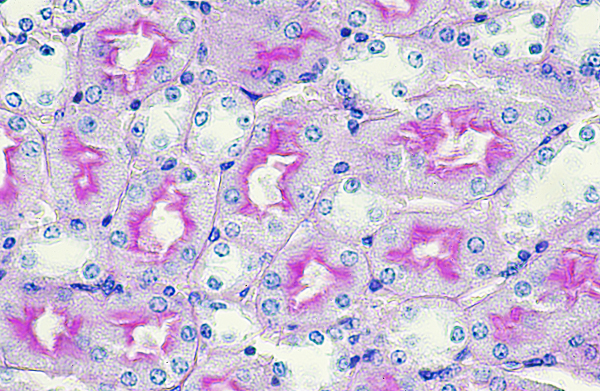
Perusing through some news today I found a few articles siting new software that is bringing 3D visualization into the histological realm. Basically they are taking histological slides and using the same type of algorithms that CT and MRI use to generate 3D images that can be moved about in space and studied.
Reading these, I was really surprised to hear that such a thing hadn’t already existed. It seems like something that you could do with Mimics honestly. But I suppose it was the actual data collection at the microscopic level that wasn’t quite available. Without a scanner doing the registration for you, one is left with having to work out each individual slide’s relationship to the next, and that could certainly eat up some time. But Dr. Derek Magee at the University of Leeds seems to have found a good way of handling that. So the person using his software scans in prepared slides, and the alignment happens automatically and a 3D image is presented.
I find it puzzling that these articles about the technology keep referring to the scanners as “virtual slide scanners.” It doesn’t sound like there is anything “virtual” about them aside from the end result they produce of allowing a virtual 3D image. Every description seems to talk about an actual physical slide being scanned for digital information. That sounds like a scanner to me. But I leave that one up to any of you reading to decipher whether you think I’m just missing something, or someone early on was quoted while trying to push technological buzzwords. In my experience, either of those things could easily be true.
The work has been published in The American Journal of Pathology but is also discussed in these articles.
http://www.medicalnewstoday.com/articles/244203.php
*image above is from a traditionally prepared histological slide*