Archive for September, 2012
A little more math for your art than we might have been raised to expect
Last night an old friend asked me about possibly speaking to her class someday about the work that I do at Sapling Learning. I don’t know if I’ll be able to do that, but I do know that the biggest message I would be inclined to want to tell kids, would be how much math there is in art these days. I know that when I was growing up, there was always this notion about the math/science/engineering folks over there, and the artist/emotive/lingual/expressive types over there. But the truth is, the more embracing of digital media we become, the more important math becomes to the everyday artist. And really, it always was important. But what you might have been feeling out in pencil and paper before, you now have to be able to communicate into a computer.
This is probably the most apparent when I am working in 3D animation programs. A background in geometry will serve you well if you ever want to do anything like this.
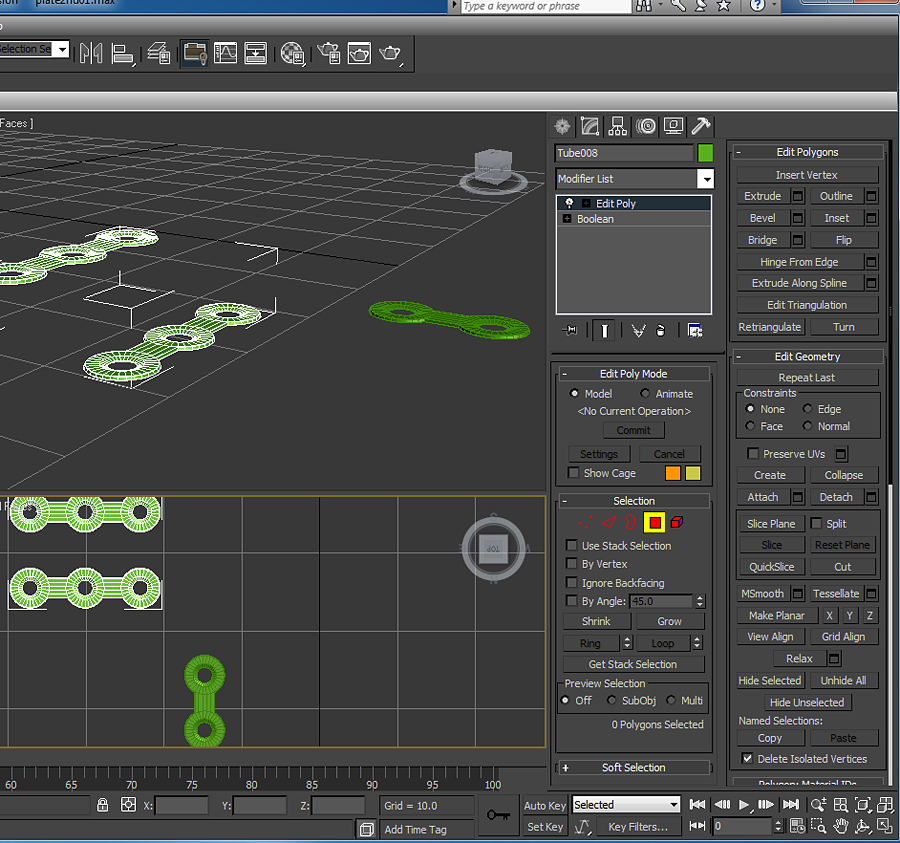
And a sense of physics doesn’t hurt either when you are trying to work out the ways in which you want something to move. I really think that schools ought to introduce these types of programs to students early on, not because everyone should know how to create 3D animations, but because you can make fun things and it really ties together so very many paths of learning. You could spend entire classes just studying the formulas of how lighting gets processed in these things.
But even without getting into 3D animation work, there is simply more and more digital media these days, and artists are having to keep a greater web presence to create new and maintain old connections with their audience. This makes software like Photoshop, Illustrator, or Gimp, that much more important. Maybe they aren’t as math intensive as 3D Studio Max and Cinema 4D, but you have to be able to speak percentages, and to know that one inch in 300 ppi has the same number of pixels as three inches in 100 ppi. You’ll have to know because you’re going to be submitting pieces to various agencies and you’ll need to be able to hit certain specifications. You have to develop a sense of how adding or subtracting one color emphasizes another, and how the rules change when one is dealing with additive or subtractive color. For the canvas, we mix colors on a palette, but in a digital space our color is understood as increments of hue, saturation, and value.
Perhaps children today are already so immersed in digital living that this shift is obvious to them. But if they are following the cues of their parents and teachers, it may not be. When I was a kid, I kind of liked geometry. But the most practical application I imagined myself having for it was to become great at playing pool, and hustle teenagers and grown-ups for their money. I certainly never thought that I would someday be using it my day to day work as an artist.
So if I were to give a talk to children about my career and what I’ve learned along the way, I would stress that first and foremost. I would stress that an aptitude or interest in the arts is no reason to ignore maths and sciences. It would also be worth pointing out to all those pegged as math and science types that they have more of an edge into the arts than they realize.
Reference Desktop Wallpaper
The fine folks over at WDL (Web Design Ledger) have put up a nice little collection of helpful desktop images for designers, particularly those of you who work with web media. Some of these look downright helpful.
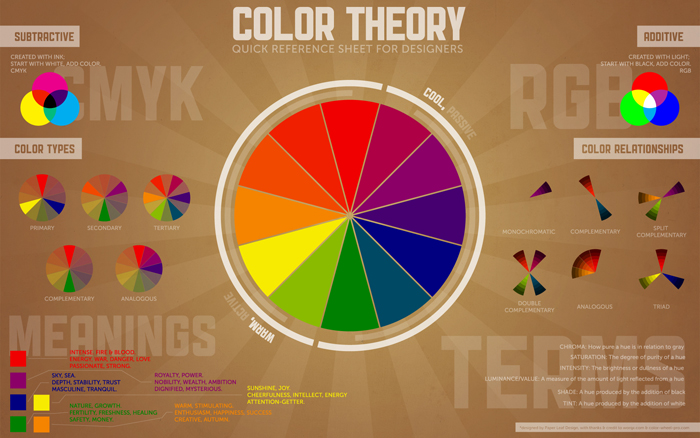
This and others, can be found at…
http://webdesignledger.com/resources/8-cheat-sheet-wallpapers-for-designers-and-developers
Thanks WDL!
How We Speak
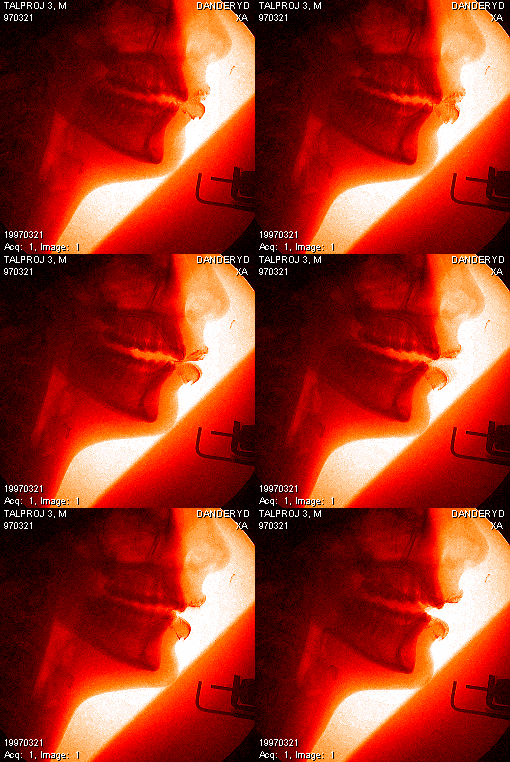
This is my first time posting a gif like this here. But I just thought this was so cool. Back when I took Advanced Craniofacial Anatomy at UIC, there was a lot of attention paid to the tongue and hyoid and jaw and all those intricacies that go on in eating or speaking. I don’t always care for gifs, but this right here, this is fantastic.
Storyboards
A lot of people overlook the importance of storyboards. And even I haven’t done any formally in a very long time. Even the scratchiest of stick figures and blobs can be helpful when one is planning out an animation or video though. Lately at Sapling, I’ve become very fond of scribbling out little storyboards on post-it notes. This allows me to communicate my intentions with people there who are smarter than me on the science end, as well as those who would be more interested in the scope of time and effort likely to go into a project.
Since I recently posted the Translation animation here, I thought I’d post the early storyboards that went with it as well. As you can see, they are nothing fancy. But just sticking little post-its on a white page allowed me to talk through a plan, and also made it easy to ditch and/or rearrange shots any time such need would arise.
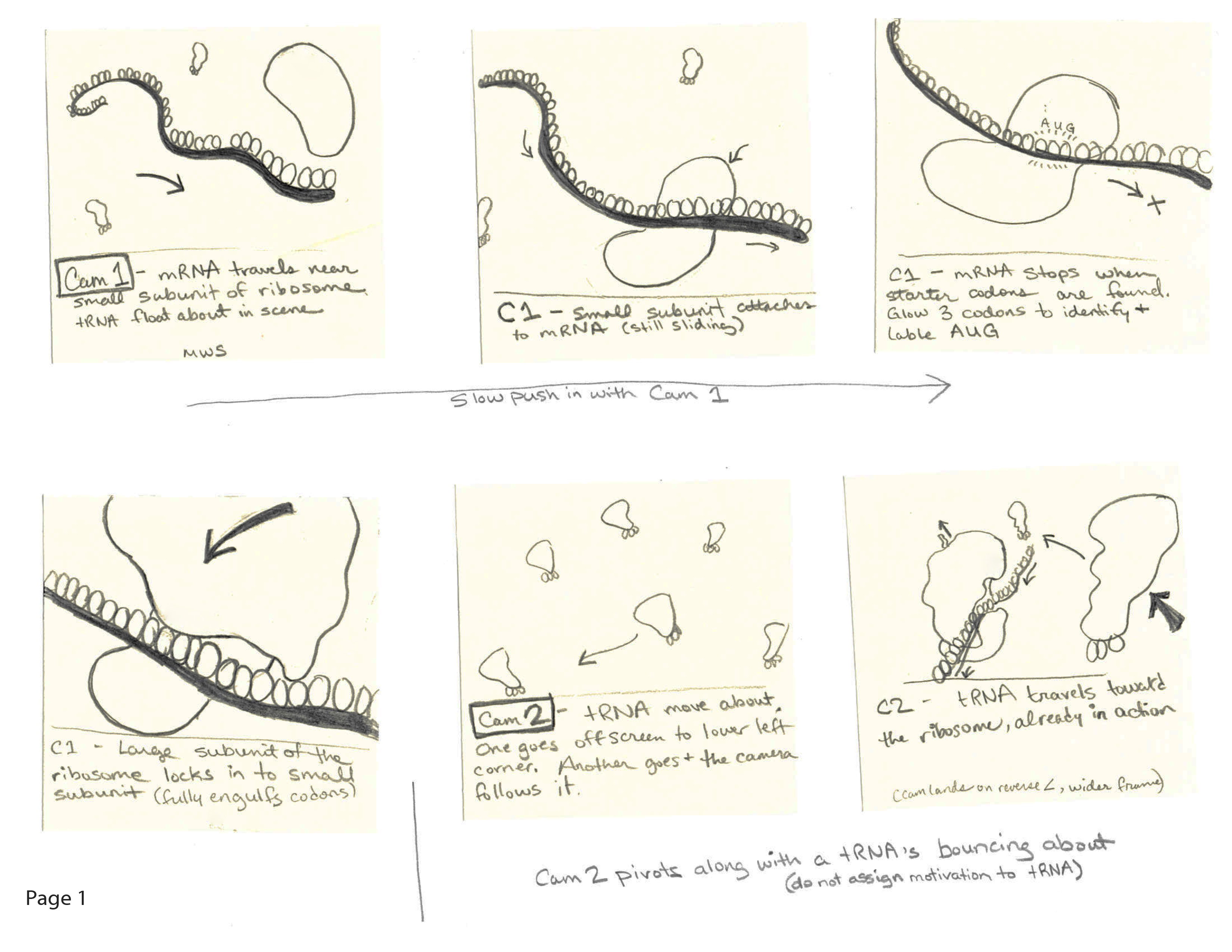
Already here, just on the first page, I learned that I was planning to run mRNA through the ribosome complex in the wrong direction, and my initial plan had to be adjusted a little to accommodate that. Mistakes like that are easy to fix in post-it note scribbles. They are not so easy when one is deep into an animation. In my case, I changed the direction that we see the mRNA first join the small subunit. Otherwise, I would have had to show the ribosome complex forming from behind (and by behind I mean to the view which blocks the mRNA entirely), which I did consider, but it seemed like this would be less confusing. I didn’t change the first couple post-its, but just remembered that I would have to get that from the other way. And I redrew the ones where I thought I might get confused.
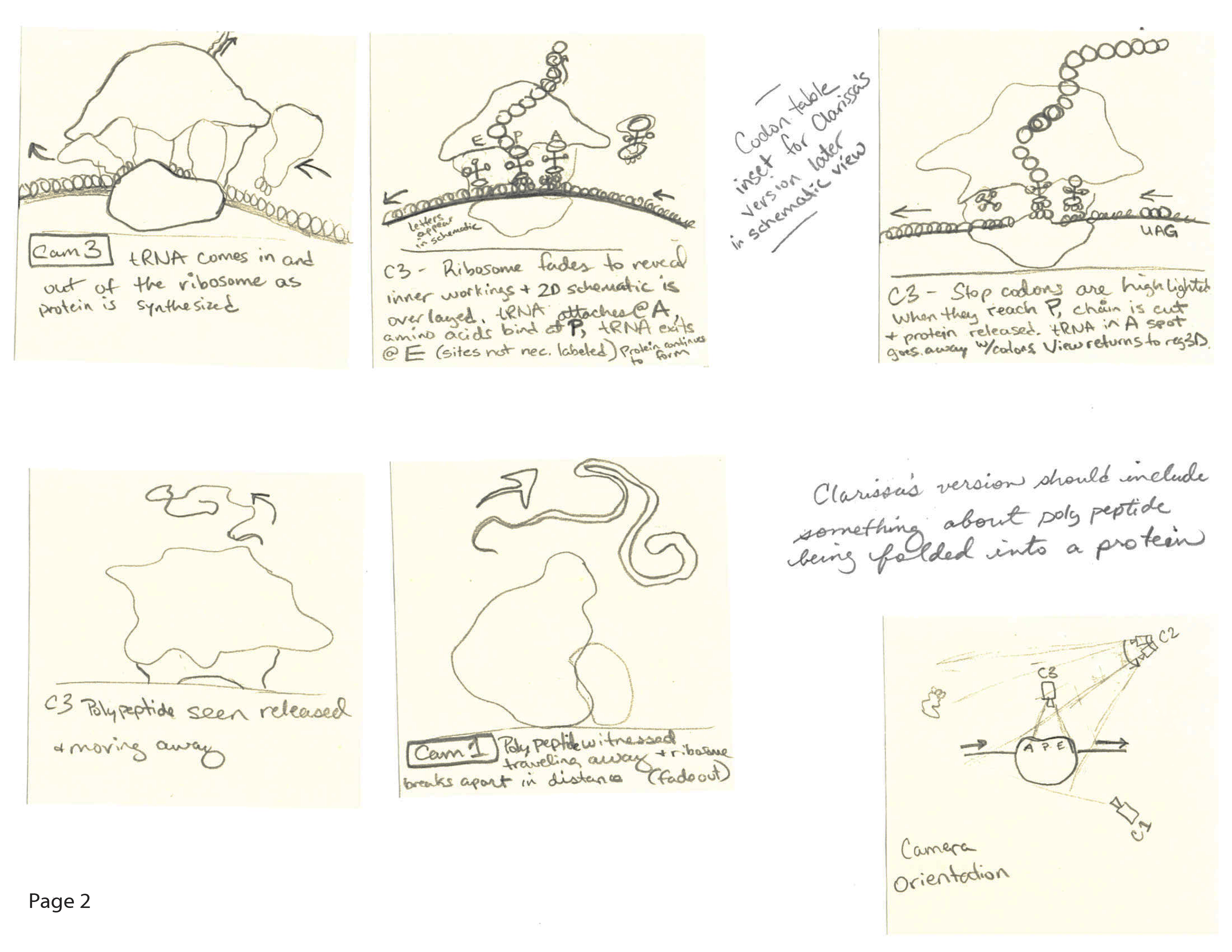
You can see that I also added a few notes in the spaces between the post-its where ideas were I wanted to remember something but didn’t feel the need to draw up anything new for it. And lastly, you’ll notice that I gave myself a little map. Especially after the initial attention to direction, I knew that I would need this. I can’t recommend doing this enough. Just that little scratch of a picture I gave myself there, was a lifesaver. It’s very easy to get lost in space when one is doing 3D work, and working with molecules can be especially tricky for that. Of course you can get more out of doing more work with your map, but don’t ever let that stop you. Just give yourself something.
Obviously, I’m not showing these off to impress anyone. Rather I’m showing them as an example of how useful even the simplest of storyboards can be in working on a project. Personally, I’m at a point where I pretty much have to think in pencil sometimes. It ain’t always pretty, but it is so helpful.
The Brewery Artwalk
Ooh, and if you happen to be in Los Angeles, I’ve got another recommendation for you.
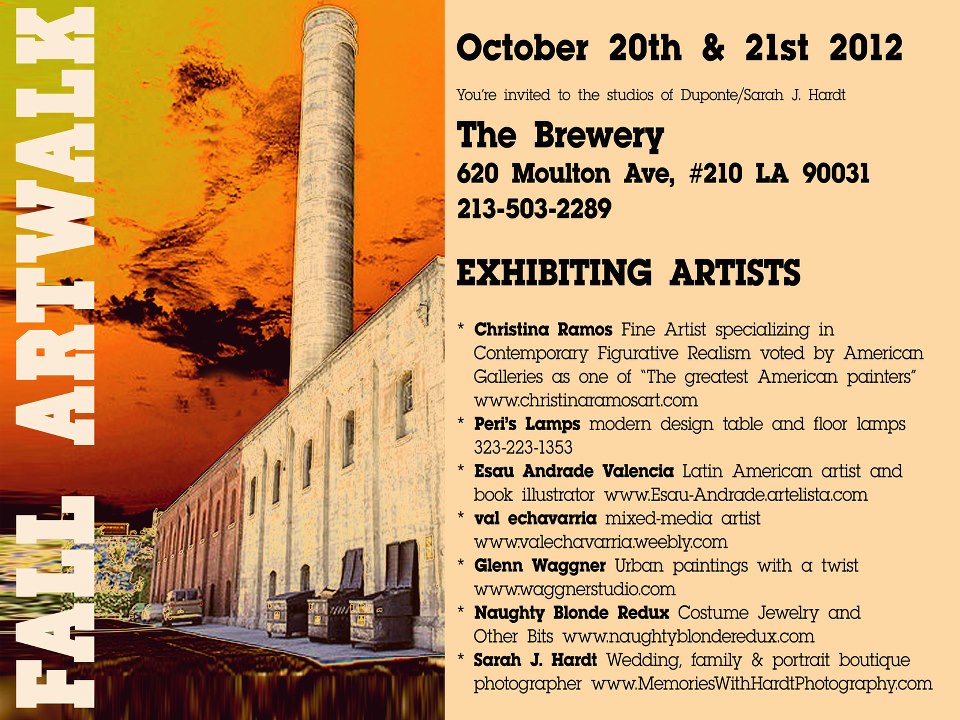
Back when I lived in Los Angeles I used to show my paintings, and sometimes some photographs as well, out of Theory Labs at these. The only downside was not being able to explore all the other areas when I had to stay with mine. Rarely do you ever get that much art into one area like that, and The Brewery is really an interesting exploration of it’s own right to begin with. I can’t recommend this one enough.
Objectify This
Reminding those of you in the Chicagoland area, that Objectify This opens tomorrow at the Design Cloud Gallery.
